
How many restrooms does a race need?
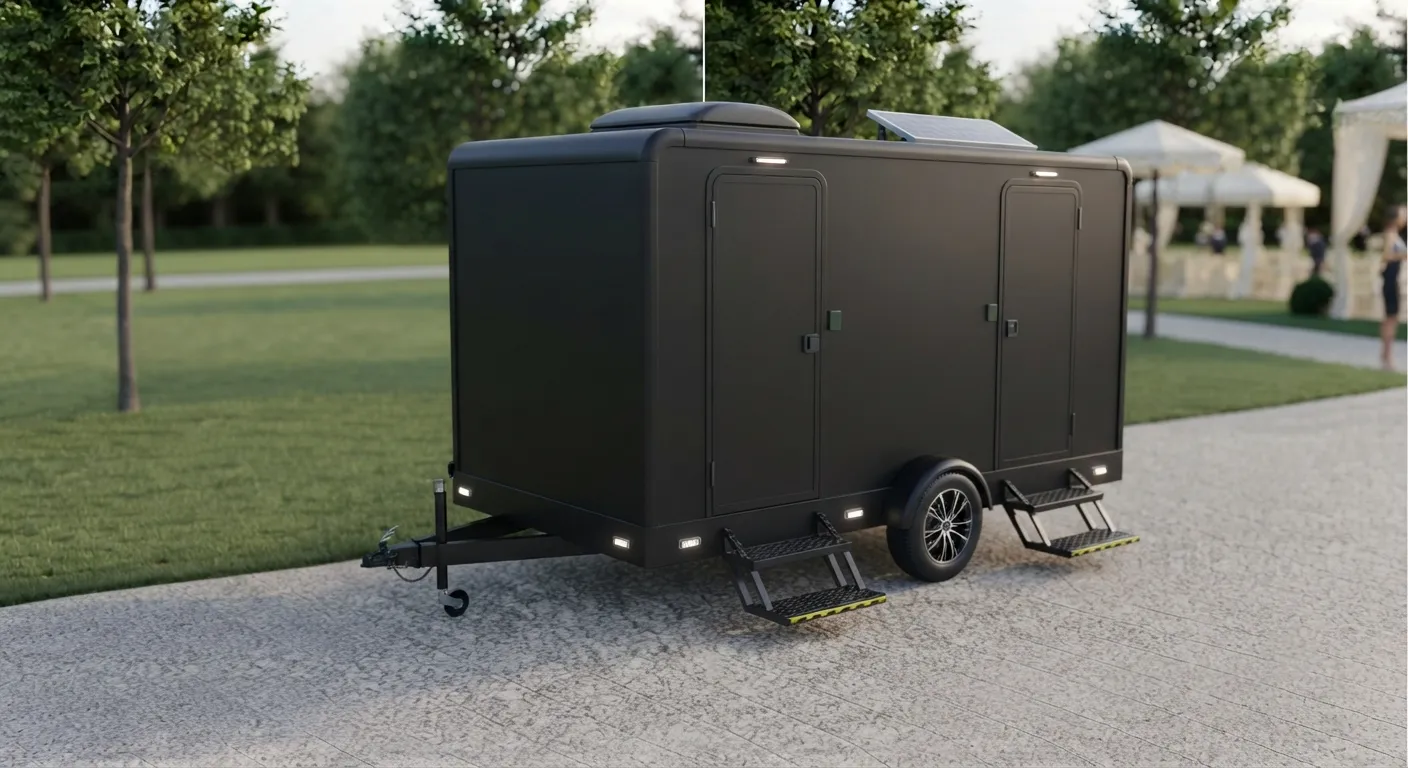
Start with the crowd, not the course. A start line with 800 runners and 200 spectators needs more capacity than the same field spread over a point-to-point route. OSHA 1926.51(c) sets construction-site ratios, but race organizers use it as a rough guide too: one toilet for every 20 people is the baseline before lines get long. For a road race, that means clustering units at the start corral, thinning out along the route, and doubling up at the finish where runners linger. Fairfield Porta Pros lays out standard porta potty rental units in blocks of four to six per location so lines move fast. If your race draws a hand-cycle or wheelchair division, ADA Standards section 213.2 requires at least one accessible unit per cluster, never fewer than one even in a small group. We pair those with our ADA accessible porta potty line, which meets the 60 inch turning circle called for in ADA Standards section 304.3.1. For finish-line VIP tents or a sponsor area, a deluxe flushable porta potty upgrades the experience without changing your footprint. Races with a beer garden or post-race festival often add a full restroom trailer rental near the vendor row, and a 4 stall restroom trailer handles that crowd without a long wait. Check our how many porta potties do I need guide before you finalize your count, since aid stations and spectator zones both pull from the same total.
Where should restrooms go on a race course?
Place them where runners slow down: start corrals, aid stations, and the finish chute. A course marshal's biggest headache is a unit blocking the running lane, so we set units back from the tape with a firm, level pad, following the slip-resistant surface guidance in ADA Standards section 302.1. Suisun City sits 2.1 miles southeast of Fairfield, close enough that courses looping toward the waterfront there are common, and we've delivered to routes that cross both cities in a single morning. If your race finishes near an event venue with a stage or timing tent, a handwashing station rental placed by the food tables covers sanitation separate from the toilets, since 29 CFR 1910.141(d)2) requires soap and towels, not just sanitizer, wherever food changes hands. Courses that pass construction zones or utility work sometimes need a temporary power pole for a timing mat or PA system; knowing how to brace a temporary power pole matters here, since the pole has to stay upright through race morning with guy wires or a base plate rated for wind load on uneven ground, and keep it clear of the running lane per OSHA 1926.404(b)(1)(ii) grounding rules. For crowd management at the finish, a crowd control barrier rental keeps spectators off the course while restrooms stay accessible. Our porta potty placement guide covers pad requirements and clearance in more depth.
What does race-day restroom rental cost?
Pricing depends on unit count, rental length, and whether you need weekend service or a single-day drop. Most races book standard units for a single event day, and larger regional races with multi-day expos or packet pickup extend into a weekend rate.
| unit | day | weekend | week |
|---|---|---|---|
| standard | $100 - $350 | $125 - $400 | $130 - $500 |
| ada | $200 - $400 | $199 - $300 | $240 - $300 |
| deluxe | $85 - $1200 | - | $150 - $290 |
Delivery adds a separate fee, typically $100 to $500 for a single day, and races that need units cleaned and moved between an early packet pickup and race morning should budget for that service call. See our porta potty rental cost page for a full breakdown, or porta potty rental per day if your event is a single Saturday morning race. Multi-day festivals pair better with our monthly porta potty rental rates if the course stays set up across a full weekend expo.
Frequently asked questions
How far in advance should I book restrooms for a race?
Book 4 to 6 weeks out for anything over 500 runners, sooner if your date lands on a holiday weekend. Fairfield fills fast for spring and fall race season. Use request a quote with your runner count and course map so we can place units correctly the first time.
Do I need ADA accessible units on a race course?
Yes, if your race allows any adaptive or wheelchair division, or if spectators include anyone using a mobility device. ADA Standards section 213.2 sets the minimum at one accessible unit per cluster. Our ADA restroom requirements page covers clearance and door width specifics.
Can restrooms be moved mid-race for a rolling road closure?
Yes, but only pre-planned. We stage extra units at a second location and swap coverage as the course closes and reopens, common on point-to-point courses through Fairfield and toward Suisun City.
What happens if it rains on race day?
Units stay usable in wet weather; the concern is ground stability. We set pads on firm, level ground per ADA Standards section 302.1 and can add extra anchoring or gravel pads if the forecast calls for rain.
Do you handle handwashing stations for aid stations?
Yes. Aid stations handling food or gels benefit from a dedicated portable sink rental separate from the toilets, keeping runners' hands clean between water stops and the finish line.
Next step
Get a delivery date
Tell us the address, the dates and the headcount. We size the order and confirm the route.