
How Do Porta Potties Work?
Picture a plastic box, about 44 by 48 inches on the ground and 92 inches tall. Under the seat sits a holding tank, and that tank is the whole system. There's no flush, no pipe out. A chemical deodorizer, usually blue, sits in that tank and starts working the moment waste hits it, breaking down solids and keeping the smell down between service visits. That's the core of how a standard porta potty rental works, and it's why these units can sit on a gravel lot in Fairfield or out at a farm with no hookup nearby. A service tech comes out on a schedule, pumps the tank, restocks the chemical and paper, and wipes it down. ANSI/PSAI Z4.3, the industry standard for portable sanitation, sets one service visit a week as the baseline for up to 10 users across a 40 hour week. Busier sites need more visits, which is why how often are porta potties cleaned depends heavily on headcount, not just the calendar.
How Do Flushable Porta Potties Work?
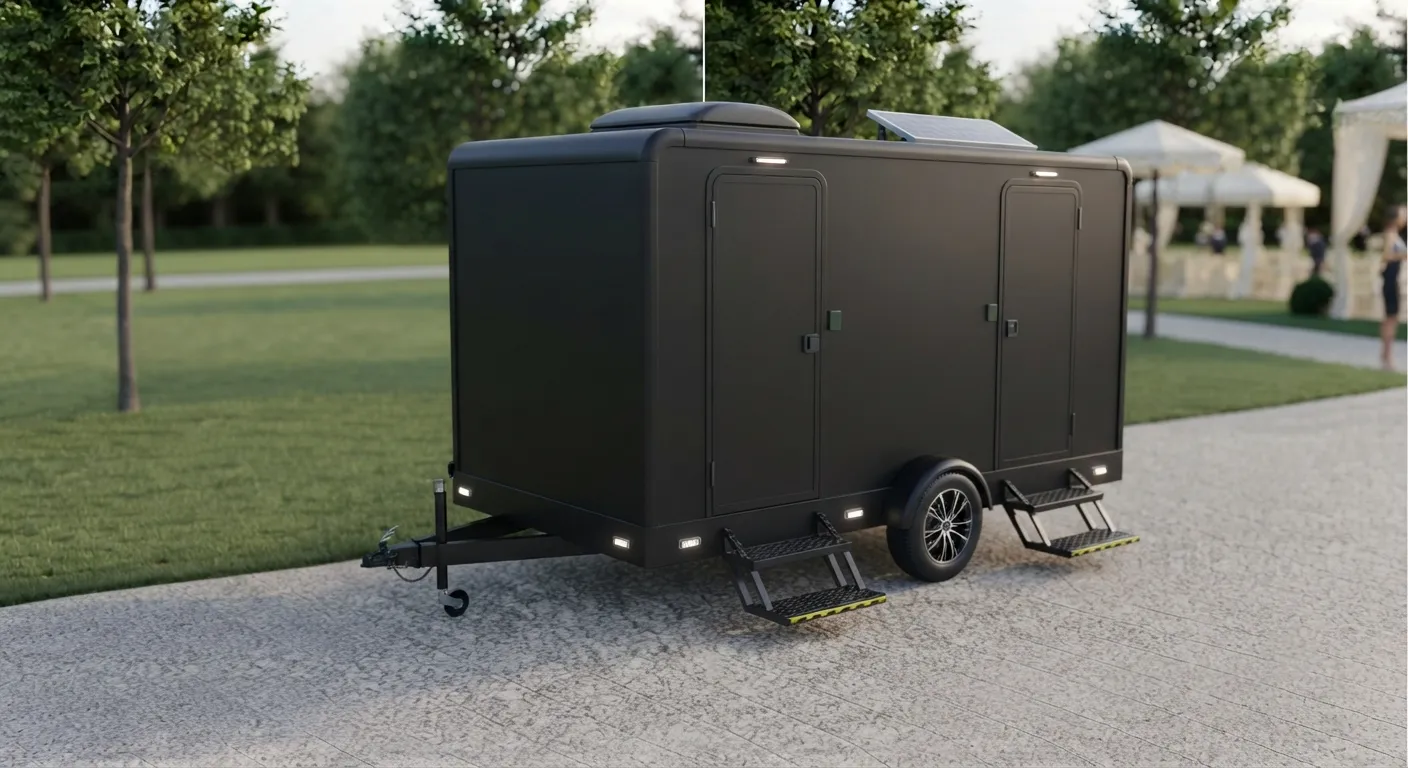
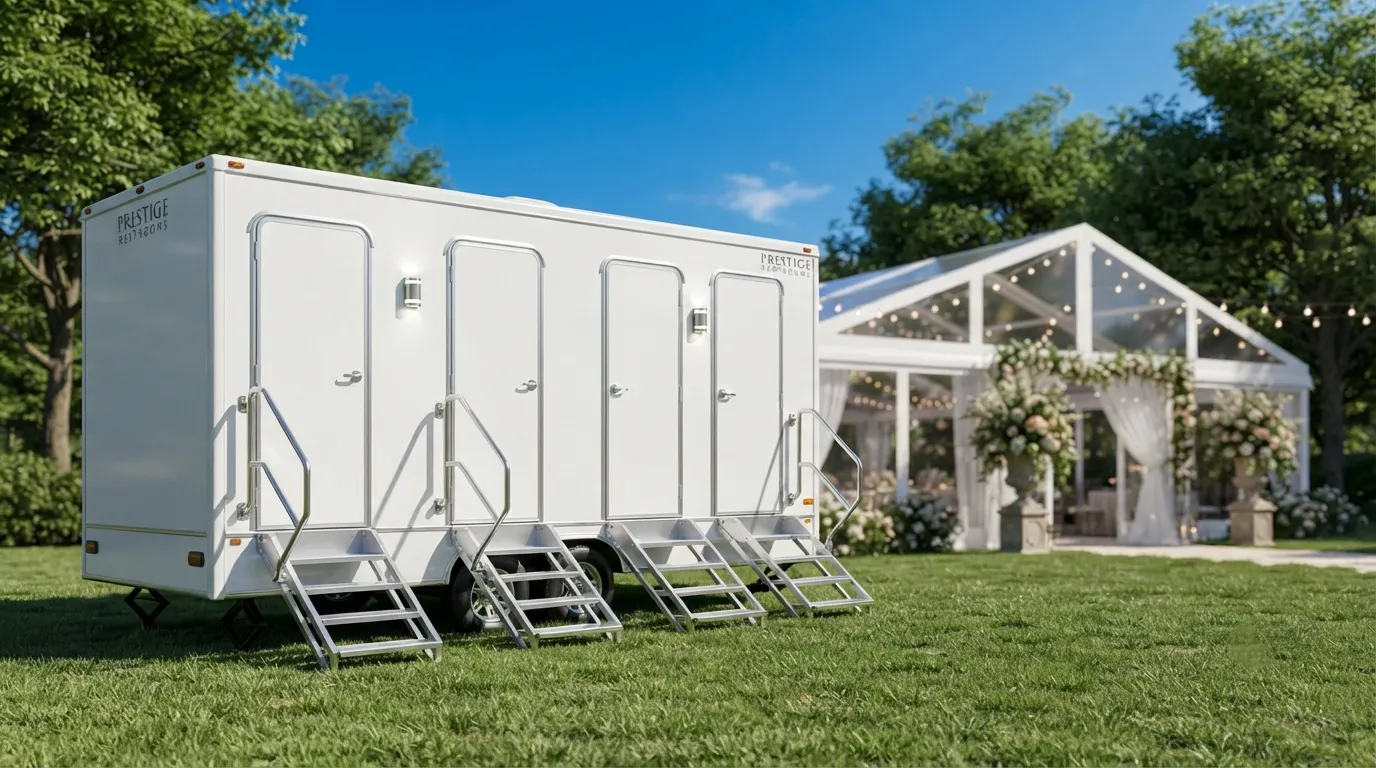
A flushable unit, sometimes called a deluxe model, uses a hand pump or foot pedal to push a small amount of fresh water into the bowl, rinsing waste down into the same kind of holding tank a standard unit uses. There's a separate freshwater reservoir onboard, so it's still self-contained, no hose required. That's the difference covered on the deluxe flushable porta potty page versus a basic unit. Some events in Fairfield, especially weddings and private parties, spring for these because the flush and the sink give it less of a job-site feel. For anyone weighing whether to spend more, the porta potty rental cost page breaks down where that extra money goes. A construction worker on a break doesn't usually care about the flush mechanism. He just needs the unit close enough that the walk doesn't eat his ten minutes, which is really a placement question more than a plumbing one, and it's covered on the porta potty placement guide.
How Does a Portable Sink Work?
A portable sink runs on a similar principle: a fresh water tank feeds the faucet, usually by foot pump or gravity, and a separate gray water tank underneath catches the runoff. No pipes into the ground, so it can sit anywhere a crew needs it, right next to a portable toilet rental cluster or off on its own near a food prep area. This matters for compliance, not just convenience. 29 CFR 1910.141(d)(2) requires washing facilities to include soap and towels or a hand-drying device, and hand sanitizer alone doesn't satisfy that. OSHA 1926.51(f)(1) also requires washing facilities specifically where workers apply paints, coatings, herbicides or insecticides, since those jobs leave contaminants that sanitizer won't cut. A handwashing station rental or a portable sink rental covers both situations. Farm crews have their own rule: OSHA 1928.110 requires potable water, toilets and handwashing within a quarter mile walk for hand-labor employees, which is why farm and agricultural restrooms get set up differently than a downtown Fairfield lot.
What Chemicals Go in a Porta Potty?
The blue liquid in the tank is a deodorizer and digester, usually a mix that suppresses odor and starts breaking down waste and toilet paper. It's dosed by the service tech at each visit, not something a renter needs to buy or refill. People searching for portable toilet chemicals near me are often trying to source this themselves, but with Fairfield Porta Pros it's part of the service call, same as pumping and restocking. This is a different chemical process than what happens in a home septic system. A septic tank cleaning chemical marketed for household tanks targets a much larger anaerobic system, not a portable unit, and using the wrong product in either system causes problems. A residential septic tank is typically pumped every 3 to 5 years depending on tank size and household size, which is a separate service covered under septic pumping service and detailed further on how often to pump a septic tank. If you're seeing backup or slow drains at a Fairfield property, the septic tank warning signs page walks through what to check before calling anyone out.
Frequently asked questions
Do porta potties smell?
They can, especially in heat or with infrequent service, but the deodorizing chemical is designed to control it between visits. Weekly service is the ANSI/PSAI Z4.3 baseline for moderate use. Sites with heavier traffic need more frequent pumping. See do porta potties smell for what actually drives odor.
How many porta potties does a job site need?
OSHA 1926.51(c) sets the baseline: one toilet for 20 or fewer workers, then additional seats as headcount rises. Crew size, shift length and site layout all factor in too. The how many porta potties do I need guide runs the actual math.
Can I rent an ADA accessible porta potty in Fairfield?
Yes. ADA Standards section 213.2 requires at least 5 percent of clustered units be accessible, never fewer than one. These units meet wider clearance and reach requirements. Details on sizing and cost are on the ADA accessible porta potty page.
How do camping porta potties work?
Same holding tank and chemical system as a job site unit, just placed for foot traffic instead of trucks. Fairfield sits near outdoor spots where private camping setups need standalone units. Check camping porta potty for placement and rental length options.
What does a porta potty rental cost in Fairfield?
A standard unit typically runs in the $100 to $350 range per day depending on length of rental and delivery distance, with weekly and monthly rates dropping the per-day cost. Suisun City sits 2.1 miles southeast and doesn't change base pricing much. Full breakdowns are on porta potty rental per day and monthly porta potty rental.
Next step
Get a delivery date
Tell us the address, the dates and the headcount. We size the order and confirm the route.